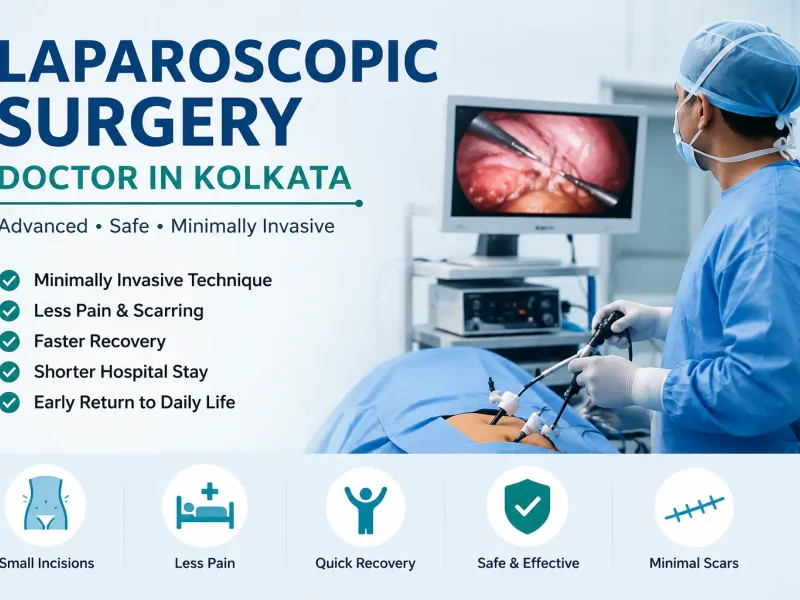
Laparoscopic surgery — also called minimally invasive surgery or keyhole surgery — is a technique in which a surgeon operates through several small incisions, usually between 0.5 and 1.5 centimetres, rather than one large cut. A thin, flexible tube called a laparoscope is inserted through one of these incisions. This instrument carries a high-definition camera that transmits live images to a monitor, giving the surgeon a real-time view of the internal organs without opening the abdomen.
Carbon dioxide gas is used to gently inflate the abdomen — creating a pneumoperitoneum, or working space — so the surgeon can see and maneuver clearly. Specialized surgical instruments inserted through the other small incisions allow them to cut, stitch, remove, or repair tissue with precision.
According to a review published in NIH's PMC (Recent Technical Developments in Laparoscopic Surgery, 2022), laparoscopic techniques have expanded significantly and are now used for conditions that were once considered unsuitable for minimally invasive approaches — including certain cancers, hernias, obesity, and cases involving previous abdominal surgeries.
Laparoscopic surgery is used for both diagnosis and treatment across multiple specialties. The most common procedures performed by laparoscopic surgeons in Kolkata include:
General and Gastrointestinal Surgery:
Gallbladder removal (laparoscopic cholecystectomy) — for gallstones and gallbladder inflammation
Appendix removal (appendectomy) — for appendicitis
Hernia repair — inguinal, umbilical, incisional, and hiatal hernias
Colon and bowel surgery — including for colorectal cancer
Bariatric (weight loss) surgery — including gastric sleeve and bypass
Treatment of gastrointestinal bleeding and abdominal tumors
Gynecological Surgery:
Ovarian cyst removal
Endometriosis diagnosis and treatment
Uterine fibroid removal (myomectomy)
Ectopic pregnancy management
Hysterectomy (laparoscopic removal of the uterus)
Investigation and treatment of unexplained infertility
Pelvic inflammatory disease (PID) assessment
Diagnostic Laparoscopy: When imaging tests (ultrasound, CT scan, MRI) cannot fully explain abdominal or pelvic symptoms, a diagnostic laparoscopy allows the surgeon to directly examine organs including the liver, gallbladder, pancreas, intestines, uterus, and ovaries. According to Manipal Hospitals Kolkata, this is particularly useful for unexplained abdominal pain, suspected cancer, and infertility workup.
Laparoscopic Surgery vs. Open Surgery: Key Differences
The advantages of laparoscopic surgery over traditional open surgery are well established in clinical literature. A 2024 NIH-indexed research review confirms several consistent benefits:
Faster recovery: Most patients can resume normal activities within one to two weeks, compared to four to six weeks or more for open surgery
Less postoperative pain: Smaller incisions mean significantly less tissue disruption and discomfort
Shorter hospital stay: Many laparoscopic procedures are performed as day-care procedures or require only 24 to 48 hours of hospitalization
Reduced blood loss: The precision of laparoscopic technique minimizes intraoperative bleeding
Smaller scars: Incisions are a fraction of the size of open surgery cuts
Lower risk of wound complications: Smaller wounds carry a reduced risk of infection and dehiscence (wound opening)
Reduced pulmonary complications: Research published in NIH's PMC (2024) found that laparoscopic surgery significantly reduces postoperative pulmonary complications compared to open procedures, particularly in patients with obesity or respiratory conditions
Open surgery is still necessary in some situations — particularly emergencies, very complex anatomical cases, or when laparoscopic access is not safe. A qualified surgeon will assess your individual situation and explain clearly which approach is most appropriate for you.
What to Expect Before Laparoscopic Surgery
Preparation for laparoscopic surgery typically involves several steps. Your surgical team will advise specifically based on your condition, but general preparation includes:
Pre-operative assessment: Blood tests, imaging (ultrasound, CT, or MRI), and a clinical consultation to assess fitness for surgery and anesthesia
Medications: Inform your surgeon and anesthesiologist about all medications, supplements, and known allergies. If you take blood thinners, diabetes medication, or thyroid treatment, specific instructions will be given about whether and how to adjust these before surgery
Fasting: You will typically be asked not to eat or drink for several hours before the procedure — your team will specify the exact timeframe
Bowel preparation: Required for some procedures, not all — your surgeon will advise
A pre-surgery consultation should include a clear discussion of the planned procedure, the alternatives, expected outcomes, and the specific risks relevant to your case. According to an NIH-indexed safety review of laparoscopic surgery, patients should be informed in advance about the possibility of conversion to open surgery — a situation that occasionally arises when laparoscopic access is unsafe to continue — so this is not a surprise if it occurs.
[REVIEWER: add clinical insight here — e.g., your approach to pre-operative assessment and patient counseling for laparoscopic procedures, and the questions you most commonly address in the consultation]
What to Expect During and After the Procedure
Laparoscopic surgery is performed under general anesthesia — you will be asleep throughout. The duration depends on the procedure; a straightforward laparoscopic cholecystectomy (gallbladder removal) typically takes 45 to 90 minutes, while more complex procedures take longer.
After surgery, you will be monitored in a recovery area while the anesthesia wears off. Most patients who undergo day-care or short-stay laparoscopic procedures can go home within 24 to 48 hours with clear written instructions for home recovery.
What to expect at home:
Mild to moderate pain around the incision sites, improving significantly within a few days
Bloating, mild cramps, or shoulder pain from residual CO₂ gas — this usually resolves within one to two days as the body absorbs the gas, according to clinical guidance from Pristyn Care's Kolkata surgical network
Fatigue for the first few days
Gradual return to light activity, with full recovery typically within one to two weeks for most procedures
Avoid heavy lifting and strenuous activity until your surgeon clears you
Signs that warrant prompt contact with your surgical team include fever above 38°C, increasing redness or swelling at incision sites, inability to keep fluids down, severe abdominal pain, or signs of wound infection.
Risks of Laparoscopic Surgery
Laparoscopic surgery is safe when performed by a trained surgeon, but like all procedures, it carries risks. According to NIH-indexed safety research, these include:
Infection at incision sites
Bleeding
Injury to nearby organs (rare, but possible — particularly bile duct injury in gallbladder surgery)
Blood clots (deep vein thrombosis) — appropriate preventive measures (thromboprophylaxis) are standard care
Reaction to anesthesia
Conversion to open surgery if laparoscopic access becomes unsafe
Serious complications are uncommon in elective procedures performed by experienced surgeons, but the risk profile is individual — depending on the specific operation, the patient's overall health, and the surgical team's experience. Your surgeon should discuss the risks specific to your procedure clearly before you consent.
[REVIEWER: add clinical insight here — e.g., your experience managing the most common complications after laparoscopic surgery, and how you counsel patients about realistic risk levels for their specific procedure]
How to Choose a Laparoscopic Surgery Doctor in Kolkata
Choosing the right surgeon matters as much as choosing the right procedure. Several factors are worth evaluating:
Qualifications and training: Look for a board-certified surgeon with postgraduate training in laparoscopic or minimally invasive surgery (MS — General Surgery, MCh, or a recognized fellowship in laparoscopy). Membership in bodies such as the Association of Surgeons of India (ASI) or equivalent specialty associations is a positive indicator.
Hospital affiliation: The quality and equipment of the hospital matter as much as the surgeon. Reputable multi-specialty hospitals in Kolkata — including Manipal Hospitals Salt Lake, IRIS Hospital, Apollo and affiliated networks — maintain modern laparoscopic suites and appropriate post-operative support.
Case volume: Surgeons who perform high volumes of a specific procedure — cholecystectomy, hernia repair, gynecological laparoscopy — generally have better outcomes for that operation. Ask how many of your specific procedure the surgeon performs annually.
Communication: A good laparoscopic surgeon will explain your diagnosis, the recommended approach, realistic outcomes, and specific risks in plain language. They will answer your questions without rushing and will present alternatives where they exist.
Patient reviews: Platforms such as Practo, Google Reviews, and Apollo 24|7 carry patient feedback that can give a sense of the surgical experience and post-operative communication. Read reviews critically — look for patterns across multiple patients, not single data points.
FAQ
What conditions are treated by laparoscopic surgery in Kolkata? Laparoscopic surgery in Kolkata is used to treat gallstones, appendicitis, hernias, ovarian cysts, endometriosis, uterine fibroids, ectopic pregnancy, colorectal conditions, and certain cancers. It is also used for diagnostic purposes when imaging cannot fully explain abdominal or pelvic symptoms. The specific procedure depends on your diagnosis and overall health.
How long is recovery after laparoscopic surgery? Recovery depends on the procedure. For most standard laparoscopic operations — gallbladder removal, hernia repair, appendectomy — most patients resume normal activities within one to two weeks. Pain and discomfort around the incisions improve significantly within a few days. Heavier physical activity should be avoided until your surgeon specifically clears you.
Is laparoscopic surgery painful? Patients typically experience mild to moderate pain around the small incision sites after laparoscopic surgery, which is substantially less than after open surgery. Some people also experience temporary shoulder pain from residual CO₂ gas, which usually resolves within a day or two. Analgesia is prescribed to manage discomfort during recovery.
What should I ask a laparoscopic surgeon before the procedure? Ask about the specific risks of your procedure, whether open surgery might be needed and under what circumstances, the surgeon's experience with your particular operation, expected recovery time, what preparation is required, and what signs after surgery should prompt you to seek medical attention. Clear answers to these questions are a good indicator of a trustworthy surgeon.
How much does laparoscopic surgery cost in Kolkata? Cost varies significantly depending on the procedure, hospital, and surgeon. Diagnostic laparoscopy and simpler procedures are typically less expensive than complex multi-organ operations. Many procedures are covered by health insurance. Most hospitals in Kolkata offer pre-surgery cost estimates, and several provide EMI payment options. Confirm insurance coverage directly with both your insurer and the hospital before scheduling.