

Emergency & Help
24/7 Emergency & General Advisory
🚨 24/7 Medical Emergency
Non-Emergency Advisory
10:00 AM – 6:00 PM, Mon–Sat
For appointments & general queries.
24/7 Emergency & General Advisory
🚨 24/7 Medical Emergency
Non-Emergency Advisory
10:00 AM – 6:00 PM, Mon–Sat
For appointments & general queries.
Menstrual disorders affect a significant number of adolescent girls and include conditions like irregular periods, painful menstruation (dysmenorrhea), abnormally heavy bleeding, and absent periods. While some irregularity is normal in the first two years after a girl's first period, persistent or s
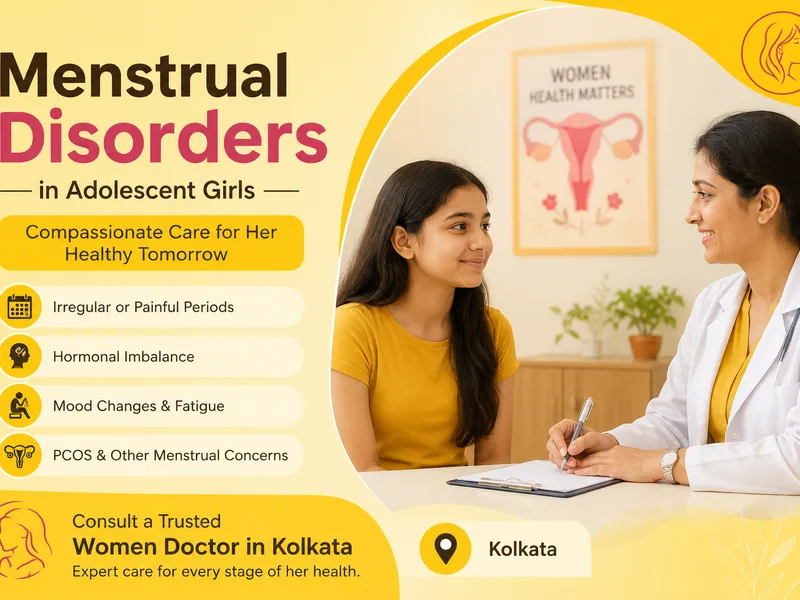
The first two years after menarche (a girl's first period) are typically irregular. Cycles can range from 21 to 45 days, and flow from 2 to 7 days — all within normal bounds, according to the American Academy of Pediatrics. A single late or skipped period during this window is rarely a red flag.
What does warrant attention: periods that remain unpredictable after two years, bleeding so heavy it soaks through a pad every hour for several hours, or pain severe enough to miss school.
Dysmenorrhea is the single most common menstrual complaint among teenage girls. The American College of Obstetricians and Gynecologists (ACOG) estimates it affects up to 90% of adolescents at some point. Primary dysmenorrhea — pain without an underlying disease — is caused by prostaglandins, chemicals that trigger uterine contractions. Secondary dysmenorrhea points to an underlying condition such as endometriosis.
Pain that responds to standard over-the-counter NSAIDs like ibuprofen is usually primary dysmenorrhea. Pain that does not respond, or that worsens over time, needs further investigation.
[REVIEWER: add clinical insight here — e.g., how you distinguish primary from secondary dysmenorrhea in your adolescent patients, and at what point you recommend imaging or referral]
AUB covers any bleeding that is too heavy, too frequent, too prolonged, or unpredictable. In teenagers, the most common cause is anovulation — cycles where the ovary does not release an egg, leading to an unstable uterine lining. This is particularly common in the first few years post-menarche.
Other causes include bleeding disorders (von Willebrand disease accounts for up to 20% of adolescents hospitalised for heavy menstrual bleeding, per the CDC), thyroid dysfunction, and polycystic ovary syndrome (PCOS).
Primary amenorrhea means a girl has not had her first period by age 15, or within three years of breast development. Secondary amenorrhea means periods stop for three or more consecutive months after they have begun.
Causes include excessive exercise, low body weight or eating disorders, thyroid disorders, and hormonal imbalances. The NIH notes that hypothalamic amenorrhea — triggered by stress, intense athletic training, or inadequate caloric intake — is especially prevalent among adolescent athletes and dancers.
PCOS is one of the most common hormonal disorders in adolescent girls and young women, affecting an estimated 6–12% of females of reproductive age, according to the CDC. In teenagers, it most often presents as irregular or absent periods, acne, and excess hair growth.
Diagnosis in adolescents requires careful interpretation — some PCOS criteria overlap with normal pubertal development, so a specialist's assessment is essential.
PMS involves physical and emotional symptoms — bloating, mood changes, fatigue — in the days before a period. Premenstrual dysphoric disorder (PMDD) is a severe form that can significantly disrupt daily functioning. The American Psychiatric Association includes PMDD in the DSM-5 as a distinct diagnosis.
Teenagers experiencing mood disturbances that track consistently with their cycle deserve to be taken seriously, not dismissed as "hormonal."
Most adolescent gynaecologists recommend seeking evaluation if:
Periods are still irregular two years after the first one
Bleeding soaks through more than one pad or tampon per hour for several consecutive hours
Cramps are not relieved by NSAIDs and interfere with school or activities
Periods are absent for three or more months
There is significant weight loss, excessive exercise, or signs of an eating disorder alongside missed periods
A pelvic ultrasound, blood tests (to check thyroid function, hormone levels, and clotting factors), and a detailed menstrual history are typically the first steps in evaluation. An internal examination is not routinely performed in adolescents unless clinically necessary.
[REVIEWER: add clinical insight here — e.g., your approach to the first consultation with a teenage patient and how you make the environment comfortable for her and her parent]
Untreated endometriosis, for example, can progress silently for years and affect future fertility. Undiagnosed PCOS is associated with long-term metabolic risks, including insulin resistance and type 2 diabetes. Iron-deficiency anaemia from heavy bleeding is a direct and avoidable consequence of undertreated AUB.
The World Health Organization emphasises that adolescent reproductive health is inseparable from overall wellbeing — academic performance, mental health, and self-esteem are all affected when menstrual disorders go unaddressed.
Treatment depends entirely on the diagnosis. Options include:
NSAIDs (e.g., ibuprofen) for primary dysmenorrhea — most effective when started one to two days before the period begins
Hormonal therapy, including combined oral contraceptive pills, to regulate cycles and reduce heavy bleeding — used for medical management, not only contraception
Iron supplementation for anaemia resulting from chronic heavy blood loss
Lifestyle modifications — nutrition counselling, stress management, and moderated exercise for hypothalamic amenorrhea
Metformin or other agents for metabolic management in PCOS
No medication should be started without a qualified medical evaluation. A gynaecologist will tailor the plan to the individual teenager's diagnosis, age, and overall health.
Q: Is it normal for a teenager to have irregular periods? Yes — some irregularity is expected in the first one to two years after a girl's first period, as the hormonal system matures. However, if cycles remain unpredictable after two years, or if periods are absent for more than three months, a gynaecologist should evaluate the cause.
Q: Can severe period pain be a sign of endometriosis in teenagers? Yes. While primary dysmenorrhea (pain without disease) is more common, endometriosis can and does occur in adolescents. Pain that is severe, worsens over time, or does not respond to standard painkillers warrants investigation. Early diagnosis can prevent progression and protect future fertility.
Q: How is PCOS diagnosed in a teenage girl? PCOS diagnosis in adolescents requires careful assessment because some symptoms overlap with normal puberty. A specialist typically looks for irregular periods persisting beyond two years post-menarche, along with blood tests for androgen levels and a pelvic ultrasound — though ultrasound findings alone are not sufficient for diagnosis in teenagers.
Q: Can heavy periods cause anaemia in teenagers? Yes. Iron-deficiency anaemia is a well-documented consequence of heavy menstrual bleeding. Symptoms include fatigue, dizziness, and difficulty concentrating. A simple blood test can confirm anaemia, and most cases respond well to dietary changes and iron supplementation alongside treatment of the underlying cause.
Q: When should a parent take their daughter to a gynaecologist for menstrual problems? Seek evaluation if periods are still irregular two years after the first one, if bleeding is heavy enough to soak through protection every hour for multiple hours, if cramps prevent school attendance, or if periods have stopped for three or more months. Early consultation is always better than waiting.
Visit Hospital
Near You
A cesarean section (C-section) is a surgical delivery in which a baby is born through an incision in the mother's abdomen and uterus. In Kolkata, several experienced obstetricians and well-equipped hospitals offer C-section services for planned and emergency deliveries. Understanding when a C-sectio
July 31, 2026
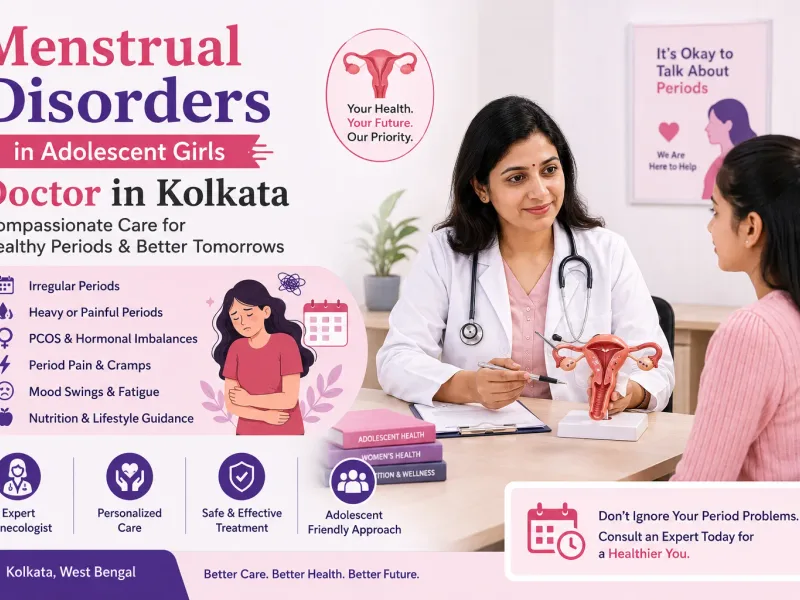
If you are searching for a Menstrual Disorders in Adolescent Girls Doctor in Kolkata, early evaluation by an experienced gynecologist can help identify the underlying cause of irregular or painful periods. While menstrual irregularities are common during the first few years after puberty, persistent
July 31, 2026
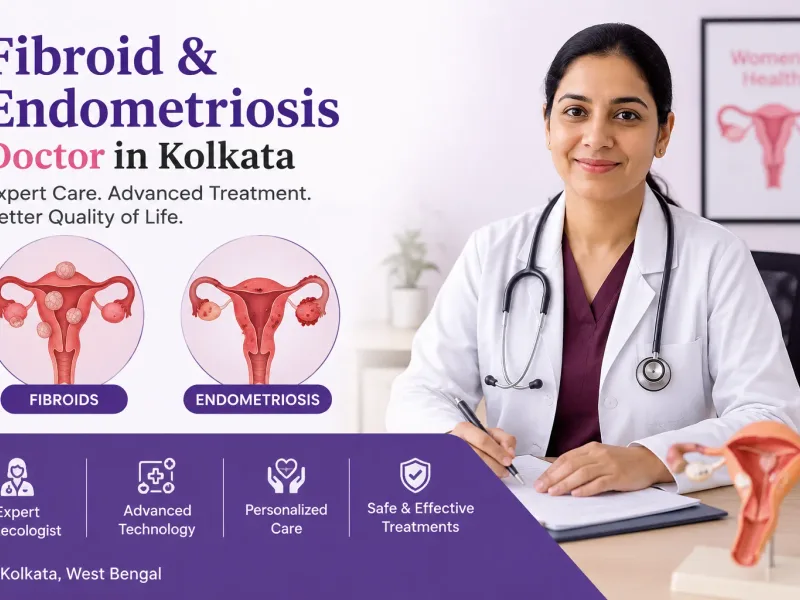
If you are searching for a Fibroid & Endometriosis doctor in Kolkata, choosing an experienced gynecologist with expertise in minimally invasive gynecological surgery is essential. Uterine fibroids and endometriosis are two common but different conditions that can cause pelvic pain, heavy menstrual b
July 31, 2026