

Emergency & Help
24/7 Emergency & General Advisory
🚨 24/7 Medical Emergency
Non-Emergency Advisory
10:00 AM – 6:00 PM, Mon–Sat
For appointments & general queries.
24/7 Emergency & General Advisory
🚨 24/7 Medical Emergency
Non-Emergency Advisory
10:00 AM – 6:00 PM, Mon–Sat
For appointments & general queries.
Normal, or vaginal, delivery is the natural process of childbirth through the birth canal, and it's linked to faster recovery and fewer complications than a C-section for most low-risk pregnancies. Many expecting mothers in Kolkata prefer a woman doctor (female obstetrician-gynecologist) for the com
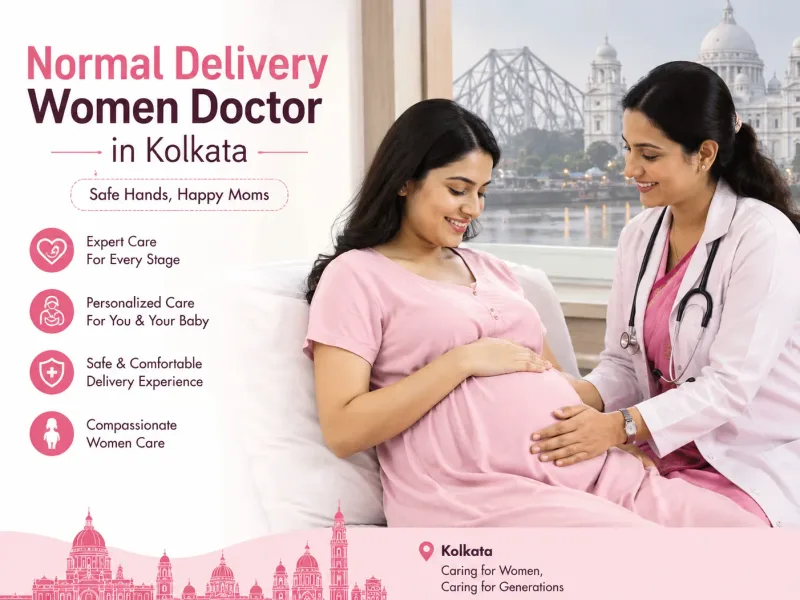
Normal delivery — also called vaginal delivery — is childbirth that happens through the birth canal without surgery. <cite index="9-1">It's considered the most natural approach to childbirth and is recommended for its substantial health benefits for both mothers and infants.</cite> For most healthy, low-risk pregnancies, it remains the first choice recommended by obstetricians worldwide.
<cite index="6-1">Globally, cesarean deliveries account for roughly 21% of all births, though this varies widely by region, and normal vaginal delivery remains the preferred option for most women because of faster recovery and fewer complications.</cite> In Kolkata, as in the rest of India, hospitals and maternity clinics generally encourage vaginal delivery whenever a mother's health and the baby's position allow it.
[REVIEWER: add a note here on how normal delivery rates and practices in Kolkata hospitals compare with national trends, based on your clinical experience]
Many expecting mothers in Kolkata specifically look for a woman gynecologist for their delivery. This isn't just a comfort preference — it can genuinely shape the quality of care:
Open communication. Pelvic exams, labor progress checks, and breastfeeding guidance can feel less awkward with a doctor many women find easier to confide in.
Shared understanding. A female OB-GYN may more easily relate to concerns around body changes, pain expectations, and postpartum recovery.
Cultural comfort. In many Indian households, family members feel more at ease when a woman doctor manages a daughter or daughter-in-law's delivery.
That said, the single most important factor is the doctor's qualification, experience with deliveries, and the hospital's obstetric and neonatal facilities — gender is a preference, not a substitute for credentials.
<cite index="6-1">A doctor is more likely to recommend normal vaginal delivery when there are no complications during pregnancy, the baby is in the correct head-down position, and there's no history of multiple prior cesarean deliveries.</cite> Conversely, <cite index="6-1">a cesarean may be recommended if the baby is in a breech or transverse position, the mother has placenta previa, there are signs of fetal distress, or the mother has had multiple previous C-sections.</cite>
Your gynecologist will assess this through regular prenatal visits — usually monthly early on, then more frequently in the third trimester — tracking your blood pressure, the baby's growth, and position via ultrasound.
[REVIEWER: add a short clinical insight on how you personally counsel patients who are anxious about attempting normal delivery after hearing about complications]
<cite index="7-1">A successful vaginal delivery brings several advantages for both baby and mother, including a higher chance of breastfeeding successfully soon after birth, a shorter hospital stay, quicker physical and psychological recovery, and stronger early mother-child bonding.</cite> <cite index="7-1">For the baby, benefits include better hormonal regulation — such as blood sugar control — improved respiratory function, temperature regulation, and more active exploratory behavior in the newborn period.</cite>
<cite index="4-1">Vaginal birth also supports natural microbial colonization in infants, which plays an important role in healthy immune system development.</cite> On the maternal side, <cite index="4-1">mothers who deliver vaginally typically experience less pain, fewer infections, and a faster postpartum recovery.</cite>
<cite index="9-1">Labor is a unique experience for every woman, and most expecting mothers benefit from preparing through childbirth classes ahead of time.</cite> Broadly, labor unfolds in three stages:
Early and active labor. Contractions start irregularly, then become more frequent and intense as the cervix dilates.
Pushing and birth. Stronger contractions help move the baby through the birth canal until delivery.
Delivering the placenta. The uterus contracts again to expel the placenta, completing the third stage of labor.
Throughout this, your doctor and the nursing team continuously monitor the baby's heartbeat, your blood pressure, and labor progress, adjusting the plan if any risk signs appear.
Immediate postpartum care focuses on monitoring vital signs, watching for excess bleeding or infection, and helping you start breastfeeding. Your doctor will typically schedule a follow-up visit within a few weeks to check your physical recovery and discuss contraception, mental health, and any concerns about the baby.
[REVIEWER: add guidance here on typical postpartum follow-up practices at your clinic in Kolkata]
Before you settle on an obstetrician-gynecologist, consider asking:
What is your personal cesarean-section rate, and how does it compare to hospital averages?
Which hospital or nursing home do you deliver at, and what's the NICU support like there?
Will you personally be present during my labor, or could I be attended by a colleague on call?
How do you handle pain-relief options during labor?
What is your policy on VBAC (vaginal birth after a previous cesarean), if relevant to me?
A good working relationship — where you feel heard and can ask questions freely — matters as much as technical expertise.
Normal delivery is the recommended path for most healthy, low-risk pregnancies, offering faster recovery and fewer complications for both mother and baby. Choosing a woman doctor in Kolkata for this journey often adds a layer of comfort and openness, but the real deciding factors should be her qualifications, delivery experience, and the hospital's readiness for both routine births and emergencies. Start conversations with your chosen OB-GYN early, ask direct questions, and build a birth plan together — one that stays flexible if your doctor recommends a different path for your safety or your baby's.
Q: How long does labor usually take for a first-time mother? <cite index="3-1">The average length of labor for a first-time mother varies, but it typically falls somewhere between 12 and 24 hours.</cite> Every labor is different, so your doctor will track your individual progress rather than relying on averages alone.
Q: Can I have a normal delivery after a previous C-section? <cite index="3-1">A vaginal birth after cesarean (VBAC) may be possible, but it depends on factors such as the reason for your earlier C-section and the type of uterine incision used.</cite> Discuss this specifically with your doctor early in pregnancy.
Q: What can I do to increase my chances of a normal delivery? <cite index="3-1">Regular prenatal care, maintaining a healthy lifestyle, and discussing a clear birth plan with your doctor can all help reduce the risk of complications</cite> that might otherwise lead to a cesarean.
Q: Is a woman doctor medically better for normal delivery than a male doctor? No — outcomes depend on the doctor's training, experience, and the hospital's facilities, not their gender. A woman doctor is often chosen for comfort and communication, which can still meaningfully improve your overall experience.
Q: When should I start looking for a gynecologist in Kolkata for my delivery? Ideally as soon as you confirm pregnancy, or even before conceiving if you're planning. Early prenatal care allows your doctor to track your health and the baby's development from the start, which supports better decision-making later on.
Visit Hospital
Near You
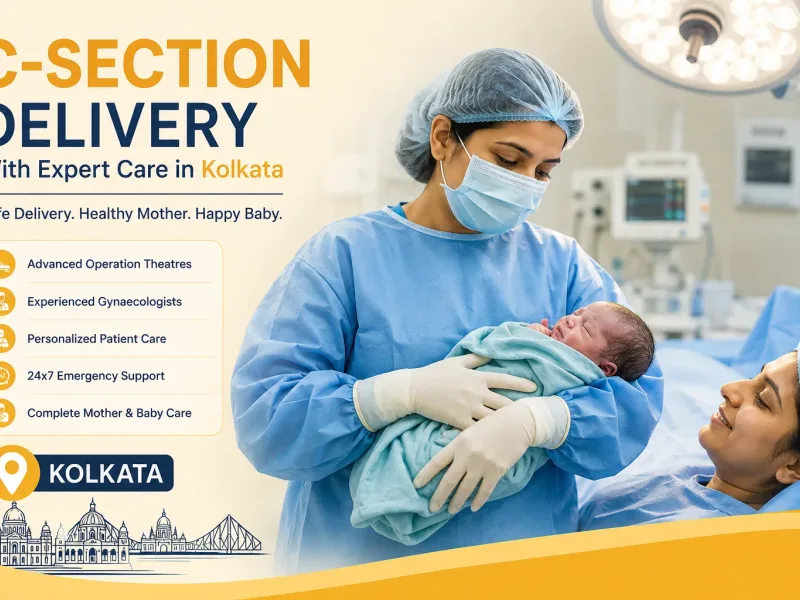
A cesarean section (C-section) is a surgical delivery in which a baby is born through an incision in the mother's abdomen and uterus. In Kolkata, several experienced obstetricians and well-equipped hospitals offer C-section services for planned and emergency deliveries. Understanding when a C-sectio
July 31, 2026
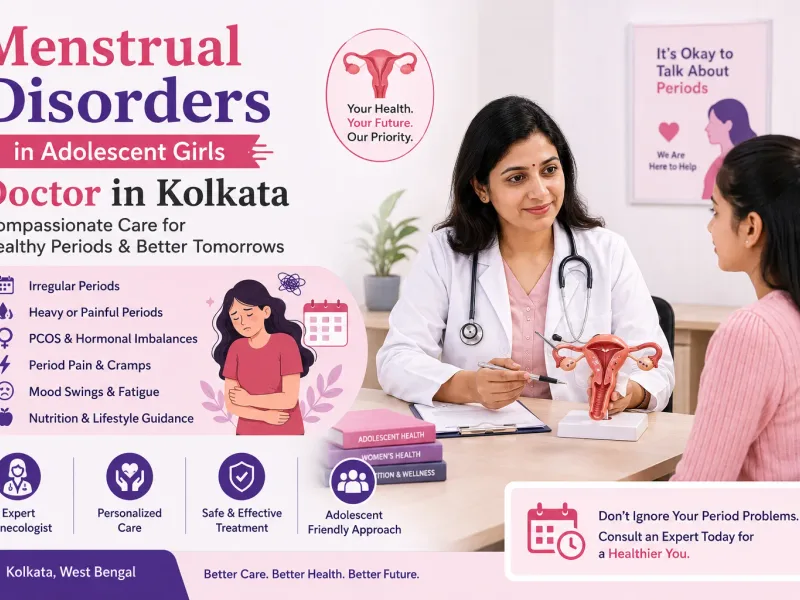
If you are searching for a Menstrual Disorders in Adolescent Girls Doctor in Kolkata, early evaluation by an experienced gynecologist can help identify the underlying cause of irregular or painful periods. While menstrual irregularities are common during the first few years after puberty, persistent
July 31, 2026
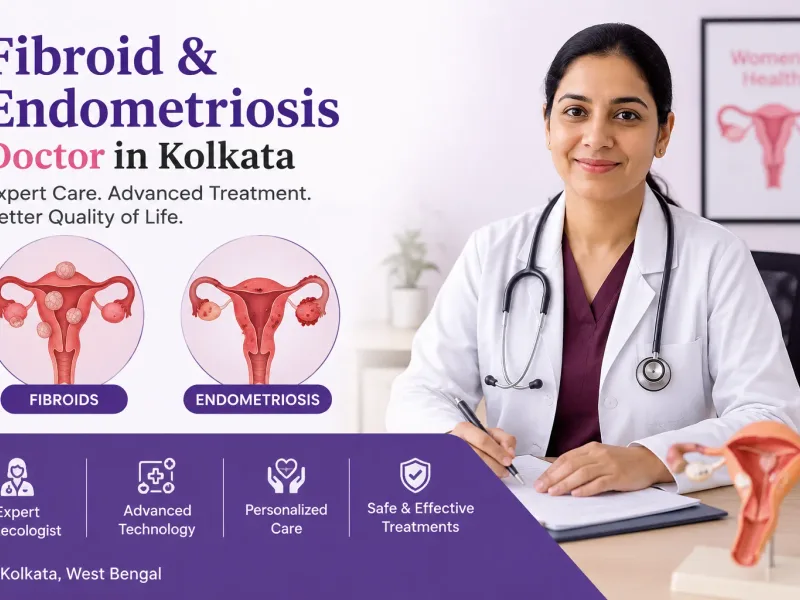
If you are searching for a Fibroid & Endometriosis doctor in Kolkata, choosing an experienced gynecologist with expertise in minimally invasive gynecological surgery is essential. Uterine fibroids and endometriosis are two common but different conditions that can cause pelvic pain, heavy menstrual b
July 31, 2026