

Emergency & Help
24/7 Emergency & General Advisory
🚨 24/7 Medical Emergency
Non-Emergency Advisory
10:00 AM – 6:00 PM, Mon–Sat
For appointments & general queries.
24/7 Emergency & General Advisory
🚨 24/7 Medical Emergency
Non-Emergency Advisory
10:00 AM – 6:00 PM, Mon–Sat
For appointments & general queries.
Explore the realities of 'vaginal rejuvenation'. Understand what it is, the risks involved, and why focusing on overall well-being is often more beneficial. Debunking myths for Indian women.

In today's world, the pressure to look and feel a certain way can be overwhelming. We see images everywhere – on social media, in magazines, and even in advertisements – that create an idealised standard of beauty. This pressure often extends to our most intimate areas, leading to questions and concerns about 'vaginal rejuvenation'. But what exactly is it, and do we really need it? Let's explore this topic with clarity and empathy, keeping in mind the unique perspectives and experiences of women in India.
The term 'vaginal rejuvenation' is a broad umbrella covering various procedures aimed at altering the appearance or sensation of the vulva (the external female genitalia) and the vagina (the internal canal). Often, the goal is to achieve a more symmetrical or 'idealised' look, sometimes described as 'Barbie-like' genitals, or to enhance pleasure during sexual intercourse. It's important to distinguish this from reconstructive procedures, which are necessary for medical reasons like treating urinary incontinence or pelvic organ prolapse. This discussion focuses on elective cosmetic procedures.
It's worth noting that procedures like colporrhaphy, which repair the bladder, rectum, or vagina, are typically considered reconstructive, not rejuvenation.
One of the most vital things to understand is that vaginas and vulvas are naturally diverse. Just like snowflakes, they come in countless shapes, sizes, and appearances, and all of them are perfectly normal and beautiful. The 'idealised' look often portrayed in media is a myth. Dr. Felice Gersh, an OB-GYN, emphasises that there's a wide range of what's considered normal. Trying to fit into a narrow, media-driven ideal can lead to unnecessary anxiety and pressure.
While the desire for confidence is understandable, these elective cosmetic procedures are not without risks. Some individuals seek tightening procedures hoping to improve sexual experiences. However, the healing process can lead to internal scarring, which may cause pain or even make penetration impossible. In some cases, the vagina can become so narrow that it causes significant problems. Similarly, labiaplasties, often done for cosmetic or confidence reasons, can lead to complications, including reduced sensation or chronic pain, if not performed with extreme care and expertise.
The FDA has also raised concerns. Non-surgical devices using lasers, light therapy, or radiofrequency for 'vaginal rejuvenation' are not approved by the FDA. In 2018, the FDA issued a strong warning about the serious risks and lack of evidence supporting the safety and effectiveness of these devices. This highlights the importance of consulting with qualified medical professionals and being wary of unproven treatments.
You might see advertisements for non-surgical 'vaginal rejuvenation' treatments like laser therapy, radiofrequency, or even certain creams and supplements. It's crucial to approach these with caution. As mentioned, the FDA has not approved many of these devices for the intended purpose, citing serious risks and insufficient evidence. These treatments often lack robust scientific backing for their claimed benefits regarding appearance or sexual function. Always discuss any such treatments with your doctor before considering them.
It's essential to differentiate cosmetic procedures from those performed for genuine medical necessity. Sometimes, changes in the vaginal or vulvar structure can impact a woman's quality of life significantly. Conditions like:
In these situations, surgical or non-surgical interventions might be recommended by a doctor to restore function, alleviate pain, and improve overall well-being. These are reconstructive or therapeutic procedures, not cosmetic 'rejuvenation'.
Perhaps the real 'rejuvenation' we should focus on isn't about altering our physical anatomy to fit an external ideal. What truly benefits from rejuvenation are aspects of our lives that contribute to our overall well-being and confidence:
If you are experiencing any of the following, it's important to seek professional medical advice:
A qualified gynecologist or women's health specialist can provide accurate information, assess your concerns, and discuss appropriate, safe, and evidence-based options if any medical intervention is needed. They can help you understand what is normal and what might require attention.
No. Vaginas and vulvas are naturally diverse. There is a wide range of what is considered normal in terms of size, shape, and appearance. Media portrayals often show an unrealistic ideal.
Surgical procedures carry risks like infection, scarring, and pain. Non-surgical devices often lack FDA approval and have warnings about serious risks and weak evidence. It's crucial to discuss potential risks and benefits thoroughly with a qualified doctor.
Some procedures aim to do this, but results are not guaranteed. Risks like scarring can sometimes make intercourse painful or impossible. Focusing on communication, intimacy, and overall well-being often contributes more significantly to sexual satisfaction.
Reconstructive surgery addresses medical issues like pelvic organ prolapse or urinary incontinence to restore function. 'Vaginal rejuvenation' typically refers to elective cosmetic procedures aimed at altering appearance or sensation.
No. The images online often represent a very narrow, often surgically altered, ideal. Your body is unique and normal. If you have concerns about your health or function, consult a doctor, but don't base your self-worth on unrealistic online images.
Visit Hospital
Near You

A cesarean section (C-section) is a surgical delivery in which a baby is born through an incision in the mother's abdomen and uterus. In Kolkata, several experienced obstetricians and well-equipped hospitals offer C-section services for planned and emergency deliveries. Understanding when a C-sectio
July 31, 2026
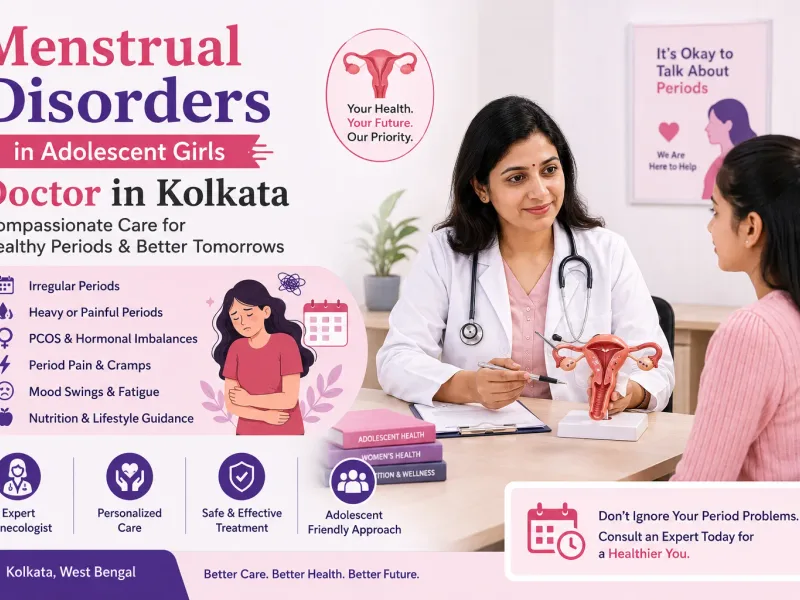
If you are searching for a Menstrual Disorders in Adolescent Girls Doctor in Kolkata, early evaluation by an experienced gynecologist can help identify the underlying cause of irregular or painful periods. While menstrual irregularities are common during the first few years after puberty, persistent
July 31, 2026

If you are searching for a Fibroid & Endometriosis doctor in Kolkata, choosing an experienced gynecologist with expertise in minimally invasive gynecological surgery is essential. Uterine fibroids and endometriosis are two common but different conditions that can cause pelvic pain, heavy menstrual b
July 31, 2026