

Emergency & Help
24/7 Emergency & General Advisory
🚨 24/7 Medical Emergency
Non-Emergency Advisory
10:00 AM – 6:00 PM, Mon–Sat
For appointments & general queries.
24/7 Emergency & General Advisory
🚨 24/7 Medical Emergency
Non-Emergency Advisory
10:00 AM – 6:00 PM, Mon–Sat
For appointments & general queries.
Sexual health is a normal part of overall wellbeing, not something to feel embarrassed about. Many women in Kolkata quietly live with pain, low desire, or infections for years before asking for help. This article explains what counts as a genuine sexual health concern, what a doctor visit usually in

Persistent pain during sex, a sudden drop in desire, difficulty reaching orgasm, or unusual discharge are all valid reasons to see a doctor — not things to simply live with. <cite index="12-1">The World Health Organization defines sexual health as a state of physical, emotional, mental and social well-being related to sexuality, not merely the absence of disease, dysfunction or infirmity</cite>. That means sexual health problems are medical problems, deserving the same attention as any other health complaint.
Many women delay treatment out of embarrassment, or because they assume nothing can be done. <cite index="4-1">Sexual health concerns are actually common among women, and when a problem causes significant distress, it may be diagnosed as a sexual dysfunction</cite>. Recognizing the signs early makes treatment simpler and more effective.
[REVIEWER: add clinical insight here — for example, common presentations you see in Kolkata patients, or cultural factors that delay women from seeking care]
Pain can come from vaginal dryness, infections, endometriosis, pelvic floor tension, or hormonal changes around menopause. It is never something to simply tolerate.
A drop in libido can stem from stress, relationship strain, hormonal shifts, certain medications, or underlying health conditions like thyroid disorders or depression.
This can be physical, psychological, or a mix of both. <cite index="16-1">Sexual dysfunction is broadly defined as a significant disturbance in a person's ability to sexually perform or experience sexual pleasure</cite>, and it can affect any part of the response cycle — desire, arousal, orgasm, or resolution.
Unusual discharge, odor, itching, or burning often signal an infection that needs proper diagnosis rather than home remedies or over-the-counter guesswork.
STIs frequently have no visible symptoms in women, which is why routine screening matters even without obvious signs of illness.
Declining estrogen after menopause can cause dryness, thinning vaginal tissue, and reduced comfort during sex — all treatable with the right medical guidance.
[REVIEWER: add clinical insight here — for example, which of these conditions you see most often, or a nuance about treatment options available locally]
You don't need to wait for a problem to become severe. Consider booking an appointment if you notice:
Pain during or after sex that doesn't go away
A sudden or lasting drop in sexual desire that bothers you
Unusual vaginal discharge, odor, itching, or bleeding between periods
Difficulty becoming aroused or reaching orgasm when this wasn't previously an issue
Sexual pain or dysfunction following childbirth, surgery, or menopause
Any sign of an STI, or if a partner has been diagnosed with one
<cite index="10-1">Sexual health concerns can be raised with a primary care doctor, a gynecologist, or even an oncologist — the doctor will refer you to another specialist if needed</cite>. A useful way to start the conversation is simply telling your doctor you want to make time to discuss your sexual health during the appointment.
For most concerns, a gynecologist is the right first stop. Depending on your symptoms, they may refer you further:
Gynecologist — the standard first point of contact for pain, infections, irregular bleeding, or general sexual health questions.
Urogynecologist — for pelvic floor issues, prolapse, or bladder-related sexual pain.
Sexual medicine specialist or sex therapist — for desire, arousal, or orgasm difficulties, especially where psychological factors play a role.
Endocrinologist — when hormonal imbalances (thyroid, menopause-related) are suspected.
Kolkata has several multi-specialty hospitals and dedicated women's health clinics with gynecology and sexual medicine departments. It's worth checking a doctor's registration with the West Bengal Medical Council or the National Medical Commission, and confirming they have specific experience in sexual health, since not every gynecologist actively practices in this sub-specialty.
[REVIEWER: add clinical insight here — for example, what credentials or affiliations patients should look for, or how referrals typically work between gynecology and sexual medicine in your practice]
A first visit usually involves a conversation about your symptoms, medical history, and any medications you take, followed by a physical exam only if needed and appropriate. Doctors are trained to discuss these topics professionally and without judgment. You can request a female doctor if that makes you more comfortable, and you're free to bring a list of questions or concerns written down beforehand.
Sexual health problems are common, treatable, and nothing to be ashamed of. If something feels wrong — pain, low desire, unusual discharge, or anything else — that's reason enough to book an appointment with a gynecologist. Write your symptoms down before the visit, ask directly for a referral to a sexual medicine specialist if your concern isn't resolved, and don't wait for things to get worse before asking for help.
Is it normal to feel embarrassed talking to a doctor about sexual health? Yes, this is extremely common. Doctors are trained to discuss these topics professionally. Starting with a simple line like "I'd like to discuss my sexual health" can make the conversation easier to begin.
Can a general gynecologist treat sexual health problems, or do I need a specialist? A gynecologist can address most concerns and will refer you to a urogynecologist, sexual medicine specialist, or endocrinologist if your issue needs more focused care.
Does low libido always need treatment? Not necessarily. Desire naturally varies with stress, life stage, and relationships. Treatment is worth considering only if the change bothers you or affects your relationship.
Can sexual health issues be linked to menopause? Yes. Hormonal changes around menopause commonly cause vaginal dryness and discomfort during sex, both of which are manageable with medical guidance.
Are STIs always accompanied by symptoms in women? No. Many STIs cause no noticeable symptoms in women, which is why routine screening is recommended rather than waiting for visible signs.
Visit Hospital
Near You

A cesarean section (C-section) is a surgical delivery in which a baby is born through an incision in the mother's abdomen and uterus. In Kolkata, several experienced obstetricians and well-equipped hospitals offer C-section services for planned and emergency deliveries. Understanding when a C-sectio
July 31, 2026
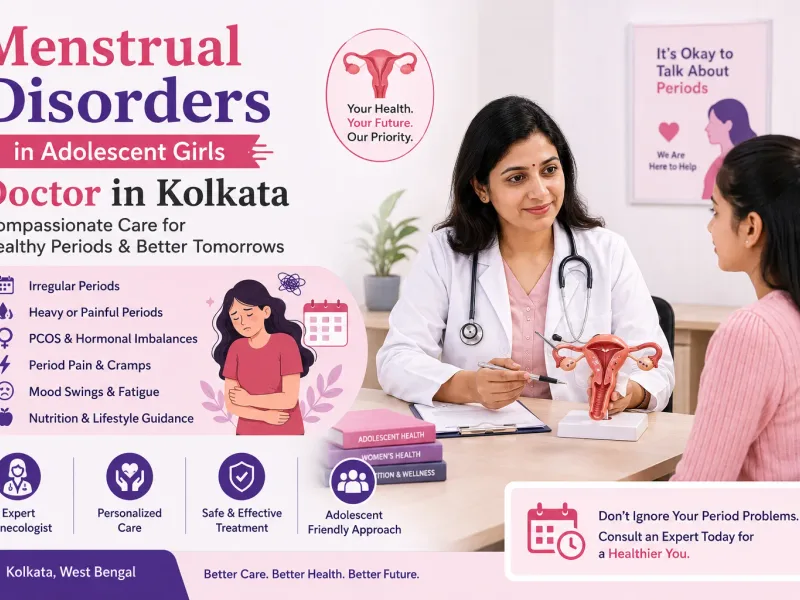
If you are searching for a Menstrual Disorders in Adolescent Girls Doctor in Kolkata, early evaluation by an experienced gynecologist can help identify the underlying cause of irregular or painful periods. While menstrual irregularities are common during the first few years after puberty, persistent
July 31, 2026

If you are searching for a Fibroid & Endometriosis doctor in Kolkata, choosing an experienced gynecologist with expertise in minimally invasive gynecological surgery is essential. Uterine fibroids and endometriosis are two common but different conditions that can cause pelvic pain, heavy menstrual b
July 31, 2026