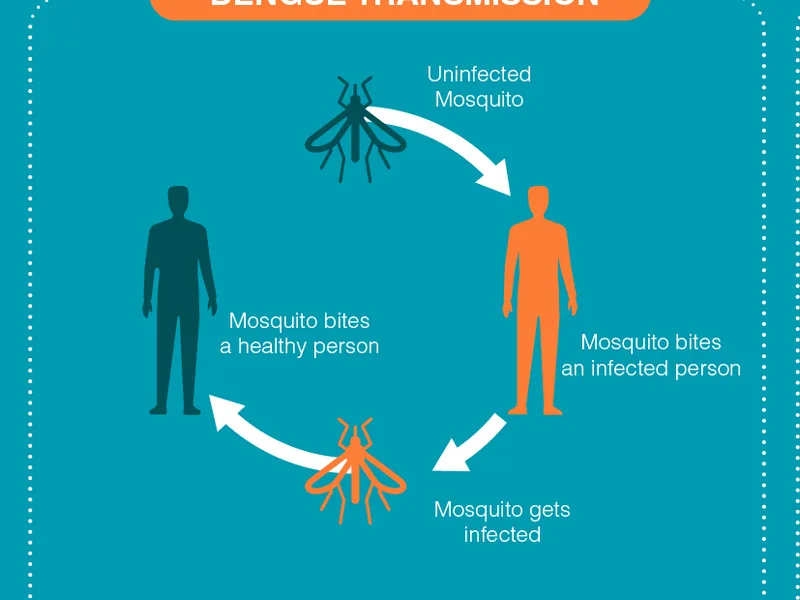
Anyone bitten by an infected mosquito can get dengue. That part's simple. What's less obvious, and honestly more useful to understand, is why the same infection hits some people far harder than others.
Risk factors for dengue split into two different questions that people tend to blur together: who's more likely to get infected, and who's more likely to get seriously ill if they do. They don't always overlap, and the second question matters more for day-to-day decisions.
Geography and Mosquito Exposure
This is the obvious one. Dengue spreads through Aedes mosquitoes, which thrive in tropical and subtropical climates, and infection risk tracks closely with how much exposure someone has to standing water and daytime mosquito activity. Urban and semi-urban areas with poor water drainage tend to see higher case numbers, partly because these mosquitoes breed in small pools of stagnant water rather than open bodies of water.
Monsoon season raises risk sharply in many regions, since rainfall creates exactly the kind of breeding conditions these mosquitoes need. There's practical detail on cutting that exposure in this mosquito control and dengue prevention guide, and understanding how the virus actually spreads helps make sense of why certain neighborhoods see repeated outbreaks while others nearby don't.
Prior Dengue Infection: The Risk Factor People Miss
Here's the one that surprises people most. Getting dengue once doesn't grant lasting immunity to all four dengue virus strains, and a second infection with a different strain carries a real, recognized risk of being more severe than the first.
The mechanism is a bit counterintuitive: antibodies from a first infection can, in some cases, actually help a second, different strain infect cells more efficiently rather than blocking it. That's part of why severe dengue shows up more often in people who've had it before, not less often. In clinical practice, this is often missed because people assume having "already had dengue" means they're somewhat protected going forward, when the opposite can be true.
If you're recovering from a first infection, that's a reason to keep taking prevention seriously rather than relaxing about it, and worth reading alongside this piece on dengue recovery time.
Age: Children and Older Adults
Children face two distinct issues. They can be harder to assess since younger kids often can't describe symptoms clearly, and there's some evidence that certain complications show up more readily in pediatric cases. Parents should lean toward earlier evaluation rather than waiting, covered in more depth in this guide to dengue in children.
Older adults carry a different kind of risk. Existing conditions like diabetes or heart disease can complicate how the body handles dengue's effects on fluid balance and blood pressure, and recovery can simply take longer. Age alone isn't a diagnosis of higher risk, but it's a reasonable trigger for a lower threshold on seeking care.
Pregnancy
Pregnant women are considered higher risk for a few reasons: symptoms can overlap with normal pregnancy discomfort and get missed longer, and there's evidence linking dengue during pregnancy to complications for both mother and baby in some cases. This isn't a reason for panic, most pregnant women with dengue recover without complications, but it is a reason for prompt evaluation rather than a wait-and-see approach. There's a full breakdown in this dengue during pregnancy guide.
Existing Health Conditions
Chronic conditions that affect blood clotting, liver function, or immune response can all shift dengue risk upward. Diabetes, kidney disease, and conditions requiring blood thinners are commonly flagged by doctors as reasons to monitor a dengue case more closely rather than manage it entirely at home.
This is also where medication choices matter more than usual. Certain common painkillers carry higher bleeding risk in dengue regardless of someone's baseline health, and that risk compounds for anyone already on blood thinners. There's a detailed rundown in this guide to medication for dengue worth reading before reaching for anything from the medicine cabinet.
What Higher Risk Should Actually Change
Being in one of these groups doesn't mean assuming the worst. It should mean two practical things: taking mosquito prevention more seriously in the first place, and having a lower threshold for getting checked if symptoms appear rather than managing everything at home. Knowing what dengue symptoms actually look like is genuinely more useful here than worrying about risk in the abstract.
If you fall into a higher-risk group and symptoms show up, reaching a general physician early, or emergency care if anything looks urgent, is a reasonable default rather than an overreaction.
Practical Takeaway
Dengue risk isn't evenly spread. Where you live, whether you've had it before, your age, pregnancy status, and existing health conditions all shift the odds, mostly around how serious an infection could become rather than whether you'll get infected at all. If more than one of these applies to you, that's a reasonable signal to act earlier rather than wait things out.
Related Reading on DOCTAR
Useful DOCTAR Tools