Here's the thing nobody expects about dengue: the most dangerous phase often starts right as the fever seems to be breaking. Patients feel like they're turning a corner. Families relax a little. That's exactly when things can go wrong.
Most dengue infections are mild and resolve on their own within a week or so, managed at home with rest, fluids, and medication that actually helps with dengue symptoms. But a smaller share of cases turn into something more serious, and catching that shift early matters enormously.
The Warning Signs That Shouldn't Wait
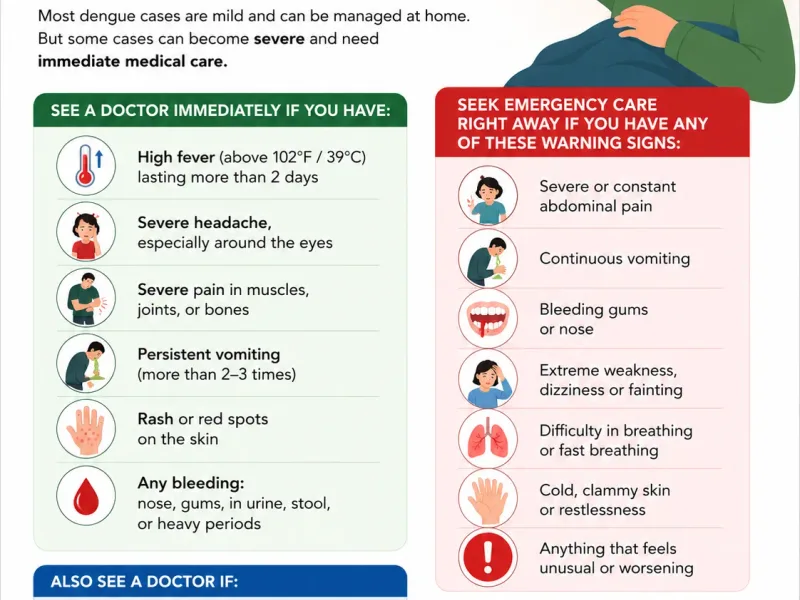
Certain symptoms mean it's time to get evaluated, not tomorrow, not "if it gets worse" — now.
Persistent vomiting is one of the clearest red flags. So is severe abdominal pain, the kind that doesn't ease up. Bleeding from the gums or nose, blood showing up in vomit or stool, unusual fatigue or restlessness, cold or clammy skin, and rapid breathing all point toward severe dengue.
In clinical practice, this is often missed because families are watching the thermometer, not the patient. A fever coming down looks like good news. But if it drops sharply while these other symptoms appear, that combination is worth immediate attention rather than relief.
If you're trying to work out whether what you're seeing fits the pattern, this breakdown of dengue symptoms and when they call for help is a useful place to check yourself against.
Who Should Be More Cautious From Day One
Not every dengue case carries the same risk. A few groups deserve closer monitoring even before any warning sign appears.
Children can be harder to read than adults, partly because younger kids don't always describe symptoms clearly and partly because they can deteriorate faster once things turn. Parents should lean toward caution rather than "wait and see" — this guide on dengue in children covers what to watch for at different ages.
Pregnant women are another group where the margin for waiting shrinks. Dengue symptoms can overlap with ordinary pregnancy discomfort, which sometimes delays recognition, and the risk of severe illness is genuinely higher. There's a dedicated piece on dengue during pregnancy that's worth reading if this applies to you.
Older adults, anyone with an existing chronic condition, and people who've had dengue before (a second infection can, in some cases, be more severe than the first) also fall into the "don't wait it out" category.
What Happens If You Wait Too Long
This isn't meant to scare anyone into panicking over a routine fever. Most people with dengue never develop severe disease. But when it does happen, the progression can move fast — sometimes within hours rather than days.
Severe dengue is a medical emergency. It typically needs hospital-based care, often intravenous fluids to manage plasma leakage, and close monitoring that simply isn't possible at home. Waiting through a night "to see how it goes" is the single most common reason severe cases arrive at a hospital later than they should.
If you're uncertain whether your symptoms already cross that line, it's genuinely faster and safer to get checked than to keep guessing. You can search for a general physician near you or, if any of the warning signs above are present, go straight to emergency care rather than booking a routine appointment.
What a Doctor Will Likely Check
A visit for suspected dengue usually isn't complicated. Expect a physical exam, questions about when symptoms started and how they've changed, and blood tests — mainly to check platelet count and signs of plasma leakage, since those numbers guide whether home care is still appropriate or whether admission makes more sense.
Bring a rough timeline if you can. When the fever started, when it changed, what medication has already been taken (this matters — some common painkillers should be avoided with dengue, which is covered in the medication guide linked above) and any bleeding, however minor it seemed at the time.
Managing Mild Cases at Home
If a doctor confirms it's a mild case, home management is genuinely effective — it's just not passive. Fluids, rest, and appropriate fever control matter more than people assume, and there are specific things worth avoiding, which this home remedies and precautions guide walks through in detail. Diet plays a supporting role too — see what to eat during dengue recovery for practical guidance.
It's also worth understanding how dengue actually spreads and what prevents mosquito bites in the first place, especially if there's an active outbreak in your area — protecting the rest of the household matters while someone is recovering.
[REVIEWER: add clinical insight here — for example, the specific vitals or lab trends you personally watch for as an early signal that a patient needs escalation, before the textbook warning signs fully appear.]
Practical Takeaway
Don't watch the fever. Watch the symptoms around it. If the fever drops but severe abdominal pain, persistent vomiting, bleeding, or unusual lethargy shows up, treat that as urgent — not a wait-and-see situation. When in doubt, a same-day visit is a far better bet than a guess made at 2 a.m.
This article should be reviewed and attributed to a qualified medical reviewer before publishing, in line with medical content trust standards.
Related Reading on DOCTAR
Useful DOCTAR Tools