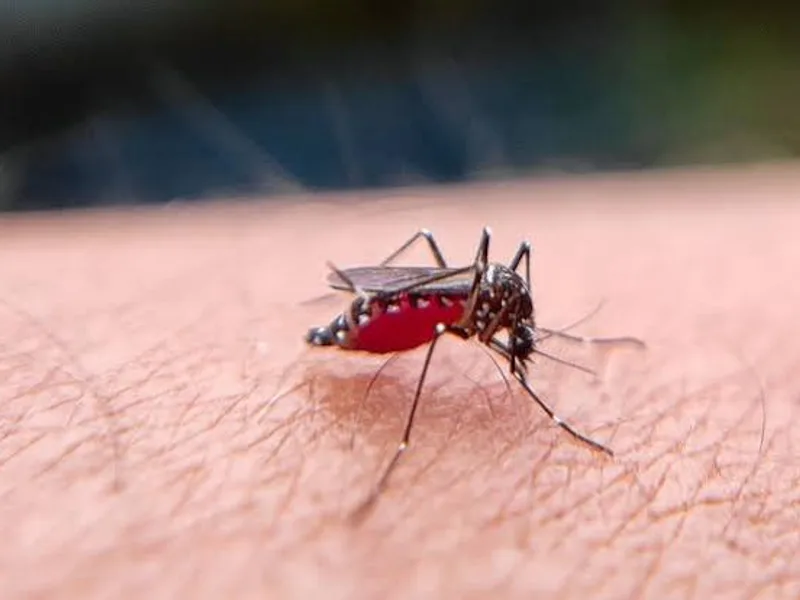
The Vector Borne Disease Task Force Jharkhand is part of the public-health response used to monitor and control diseases spread by mosquitoes and other vectors. These include malaria, dengue, chikungunya and, depending on the area and surveillance findings, diseases such as Japanese encephalitis and kala-azar.
Jharkhand's climate, forested areas, rural settlements and seasonal rainfall create different disease risks across districts. The state's climate-health planning therefore places emphasis on surveillance, early detection, vector control and preparedness rather than waiting for a large outbreak to develop.
For readers unfamiliar with mosquito-related illness, Doctar's guide on mosquito-borne diseases in India explains which diseases mosquitoes can actually transmit.
Why does Jharkhand need a dedicated task-force approach?
Monsoon changes the public-health picture quickly. Rain can create breeding places, while changes in temperature and humidity can influence mosquito populations and disease transmission.
Jharkhand's state climate-health plan identifies malaria, dengue, chikungunya and Japanese encephalitis among important vector-borne illnesses and calls for stronger surveillance, vector-control measures, capacity building and early-warning systems.
This is also why residents should not assume that every monsoon fever is "just viral fever." A person with persistent fever may need medical assessment to determine whether dengue, malaria or another infection is responsible. Doctar's viral fever guide for Ranchi discusses why similar symptoms can require different evaluations.
How does the task force work?
1. Disease surveillance
Surveillance is the backbone of outbreak control. Health teams track suspected and confirmed cases, look for geographical clusters and identify areas where additional investigation may be required.
Jharkhand's planning document specifically describes active and passive surveillance, sentinel sites and mapping of vulnerable populations and disease patterns.
For malaria, laboratory confirmation can be particularly important. A peripheral blood smear for malaria remains a useful diagnostic method when performed by trained personnel.
2. Fever surveys and field visits
Field surveillance brings the system closer to households. During a 2022 monsoon campaign, Jharkhand's health department used door-to-door fever surveys in selected areas to identify malaria, dengue and chikungunya cases early.
That approach matters because many patients initially describe only "fever and weakness." In clinical practice, this is often missed because early symptoms of several infections overlap. Asking about location, mosquito exposure, travel, duration of fever and associated symptoms can provide useful clues.
Readers can also review Doctar's adult fever guide and fever management guide for general education.
3. Mosquito control
Finding cases is only half the job. The next step is reducing exposure to the vector.
For dengue and chikungunya, Aedes mosquitoes can breed in small containers holding stagnant water. Households should therefore check buckets, flowerpot trays, discarded containers, tyres, coolers and other places where rainwater can collect.
Doctar's dengue mosquito-control guide provides practical information on eliminating breeding sites.
Personal protection also matters. The mosquito protection clothing guide explains why thin clothing may not always provide a complete barrier.
People curious about why mosquitoes seem to target some individuals more than others can read why mosquitoes are attracted to certain people and mosquito attraction and blood type.
Dengue, malaria and chikungunya need different attention
These diseases are often grouped together because mosquitoes transmit them, but they are not the same illness.
Dengue is caused by a virus and is spread mainly by infected Aedes mosquitoes. Malaria is caused by Plasmodium parasites and is transmitted by infected female Anopheles mosquitoes. Chikungunya is another mosquito-borne viral infection that can cause prominent joint pain.
A guide to chikungunya prevention and mosquito control explains the disease and its prevention measures.
For malaria, readers can also explore malaria and sickle-cell disease and the importance of accurate testing.
What happens when fever is accompanied by low platelets?
Low platelet counts can occur with several infections and do not automatically prove that a person has dengue.
Doctar's fever with low platelets guide explains why dengue, malaria and other infections can sometimes produce this combination.
A related issue is knowing how long dengue symptoms may last. The dengue recovery timeline and dengue duration guide provide general information, but individual recovery varies.
People with conditions such as diabetes may need closer medical attention during infections; see Doctar's diabetes and dengue guide.
Community participation is a major part of prevention
A task force cannot control mosquito-borne disease by itself. Residents, schools, local bodies, health workers and healthcare facilities all have a role.
Simple environmental action can make a difference: remove standing water, keep water-storage containers covered, maintain window screens and use appropriate mosquito protection.
Parents should take extra care with infants and young children. Doctar's mosquito-bite guide for babies covers household prevention.
A mosquito bite itself usually does not mean that a person has an infection. For information about ordinary bites, see mosquito bites and scarring, mosquito bites and bruising, and mosquito-bite blisters.
What should residents do during the monsoon?
Residents should report unusual clusters of fever to local health authorities and seek medical evaluation when fever is persistent, severe or accompanied by concerning symptoms.
Do not self-diagnose dengue or malaria from symptoms alone. A fever with rash, significant weakness, unusual bleeding, breathing difficulty, confusion, persistent vomiting or worsening symptoms deserves prompt medical attention.
Other infections can also cause fever and rash, so readers may find Doctar's rash guide useful. Similarly, cellulitis and insect bites explains how a damaged bite site can sometimes develop a bacterial skin infection.
The wider monsoon picture matters too. A guide to dehydration and fever care discusses maintaining fluids and nutrition during illness.
Why early reporting matters
The real strength of a vector-borne disease task force is speed. Surveillance can identify a pattern; laboratory testing can clarify the cause; field teams can investigate; and mosquito-control measures can be directed where they are most needed.
Jharkhand's state plan specifically proposes vulnerability mapping, strengthened surveillance, capacity building, community awareness and early-warning mechanisms for vector-borne illnesses.
The task force is therefore not simply a "dengue team." It is part of a wider public-health system designed to detect disease, coordinate response and reduce transmission.